Article
Why providers need a FHIR-based clinical data repository, and why splitting it makes no sense
 Prof. Dr. med. Felix Nensa · Co-founder, radiologist
November 2025 · 3 min read
In healthcare, data fragmentation has always been the enemy of progress. Today, as hospitals face increasing pressure to deliver high-quality, data-driven care while also enabling innovation and research, many organizations are re-evaluating how to manage their clinical data repositories (CDRs).
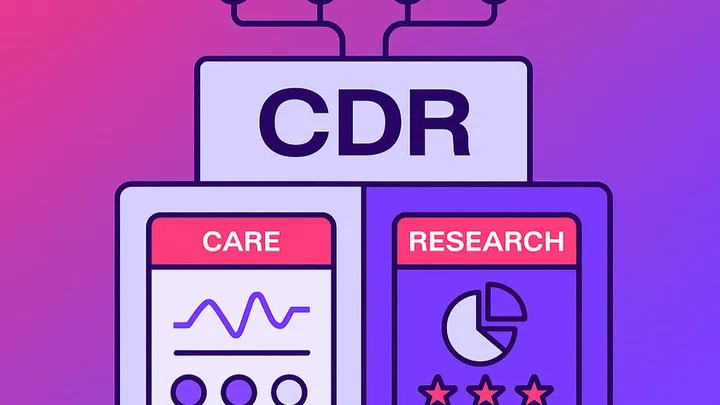
A frequent question we encounter at Firemetrics is whether there should be two separate CDRs: one for clinical operations and another for research.
Our position is clear: the future belongs to a unified, FHIR-based CDR that securely supports both care and research through governance, architecture, and access controls, not physical separation.
1. The CDR as the Foundation for Modern Care
A clinical data repository is no longer just a passive data sink. It’s becoming the foundation for new digital services both inside and outside the hospital.
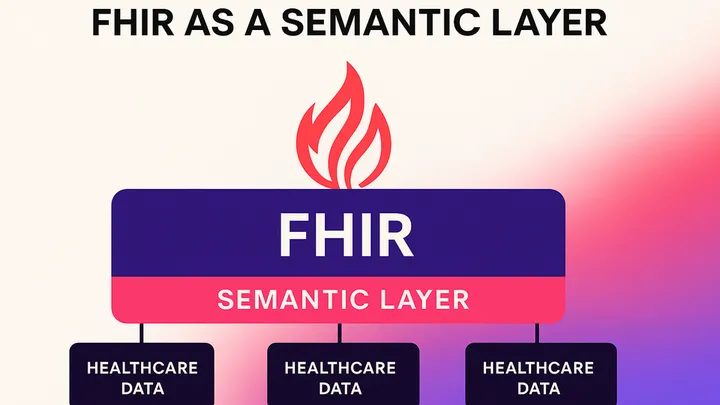
FHIR (Fast Healthcare Interoperability Resources) provides the standard to unify all patient-related data: structured, coded, and ready for use across applications, dashboards, and AI-driven tools.
A FHIR-based CDR such as Firemetrics acts as:
- The interoperability hub that connects EMRs, RIS/PACS, LIS, and other systems.
- A real-time analytical engine that powers dashboards, predictive models, and decision support.
- A secure environment where data is consistently accessible to authorized clinicians, researchers, and patients.
In this setting, anonymization is typically not mandatory since the data is used for direct care. What is essential is fine-grained access control, traceability, and performance isolation - all built into the Firemetrics architecture.
2. Research Is No Longer a Separate World
Clinician-led research is not an “external” process anymore. Across Europe, legal frameworks such as Germany’s Eigenforschung and France’s exception des études internes explicitly permit physicians to conduct research on their own patients’ data, within the care context.
These clinicians don’t want delayed, incomplete, or outdated data. They need the same semantics and freshness as the data they use in care, the very essence of FHIR-based interoperability.
By designing the CDR as a dual-use platform, hospitals can:
- Empower clinician-researchers without creating redundant data copies.
- Enable near-real-time cohort discovery, quality improvement, and outcome tracking.
- Maintain full compliance with privacy and cybersecurity regulations by applying pseudonymization or anonymization per access path rather than per system.
3. The Cost of Fragmentation
Traditional research data warehouses rely on “export and deliver” workflows: data extraction, validation, correction, and re-importation. Each step consumes weeks or months, often delaying projects or making real-time insights impossible.
With Firemetrics’ relational FHIR engine, the same data can be queried in real time using SQL without impacting the performance of the transactional systems.
This architecture supports dedicated analytical read replicas, ensuring that:
- Clinical operations stay performant and isolated.
- Researchers can query without risk of interference.
- Anonymization, pseudonymization, and access control policies are applied dynamically.
The result is 80–90% faster time-to-insight and a significant reduction in IT overhead.
4. Clinical Operations Depend on Analytics
Even outside of formal research, hospitals increasingly rely on analytics for care quality and efficiency:
- Monitoring operating room utilization.
- Tracking imaging throughput.
- Detecting bottlenecks in emergency departments.
- Performing infection surveillance in real time.
These use cases require the same analytical layer that research depends on, meaning the infrastructure must support both from the start. A single, unified CDR avoids data duplication and keeps care and analytics aligned on one source of truth.
5. Enabling AI and Real-Time Intelligence
AI-driven decision support, predictive models, and workflow optimization tools all rely on continuous access to current, standardized clinical data. When the analytical environment is disconnected from the clinical system, AI development becomes slow, brittle, and difficult to validate.
A unified, FHIR-based CDR allows hospitals to integrate AI safely and efficiently, whether for early sepsis detection, personalized oncology, or predictive staffing models.
Firemetrics’ relational engine based on native FHIR data, makes it possible to build, train, and deploy AI solutions directly within the governed data environment.
6. Governance and Compliance by Design
The key to making this dual-use model work is not separation, it’s governance by design.
Firemetrics enforces:
- Role-based access control integrated with identity providers via SMART-on-FHIR and OIDC.
- Read/write isolation between clinical and analytical workloads.
- Configurable pseudonymization pipelines per research project.
- Auditability and traceability across all data access events.
This ensures compliance with HIPAA, CNIL, GDPR, and similar frameworks while keeping innovation agile.
Conclusion: One CDR, Many Use Cases
Splitting the CDR into separate systems for care and research creates barriers that slow down progress and increase risk.
A single, FHIR-based CDR designed for dual use offers the flexibility, security, and scalability healthcare organizations need to:
- Deliver safer, data-informed care.
- Accelerate research and innovation.
- Enable trustworthy AI and analytics.
- Reduce operational costs and complexity.
At Firemetrics, we believe that the future of healthcare data is unified, interoperable, analyzable, and governed from the start.
- Clinical Data Repository
See it on your own data